Domaine du Mortier

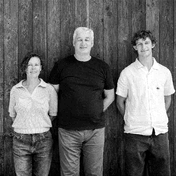
Brothers Cyril and Fabien Boisard of Domaine du Mortier walking in their vineyard

Cyril and Fabien Boisard did not inherit a winemaking tradition. They fell into it as teenagers when their parents bought a house with a small vineyard, and that accidental passion grew into one of the most respected natural-wine addresses in Saint-Nicolas-de-Bourgueil.

Backstory

The Boisards' parents acquired the property with its vines in 1989. The brothers founded Domaine du Mortier in 1996, naming it after the hamlet where the cellar and vineyards sit, just west of the town of Bourgueil. The estate now produces roughly 75,000 bottles a year.

The Region

The domaine works around 16 hectares in the western Loire Valley, with holdings of about 8 hectares in Saint-Nicolas-de-Bourgueil and 2 hectares in Bourgueil, plus 6 hectares devoted to an experimental agroforestry project. The soils are gravel, sand, clay and flint over the local chalk known as tuffeau.

Vineyards and Farming

The brothers applied organic principles from the start, achieving certification in 1999, and adopted biodynamics in 2007. Harvest is by hand into small crates.

Winemaking

Fermentations are spontaneous with native yeasts, with no added yeast, enzymes or tannins. The wines ferment and age in stainless steel, concrete and oak vats, with elevage running from 6 to 24 months depending on the cuvee, and only minimal sulfur, mostly at bottling.

The Wines

The principal grapes are Cabernet Franc, Grolleau, Chenin and Sauvignon Blanc. Cuvees include the parcel reds Les Sables, Les Graviers and Les Pins, the Dionysos bottling, and the playful Brain de Folie range from the experimental vines.

More articles

Gareth and Rainbo Belton of Gentle Folk standing with their child in their Basket Range vineyard
Two marine scientists traded the study of seaweed for the soils of Basket Range, building one of the Adelaide Hills' most beloved natural wine labels.
Rhône Valley French wine regions blog, landscape photo from above, natural wine, primal wine - primalwine.com
The Rhône Valley, in southeastern France, borders the Alps to the east and the Massif Central to the west. The Rhône Valley is renowned for its incredibly expressive wines and hearty cuisine. In particular, the region's wines, influenced by its...

Italian Wine Regions

Pencil color illustration of Valpolicella - primalwine.com
Valpolicella is versatility in a glass—cherry-bright Valpolicella, velvet Ripasso, and contemplative Amarone, all shaped by...
Pencil color illustration of Mount Etna - primalwine.com
Etna is energy in a glass: Nerello Mascalese and Carricante channel lava flows, altitude, and...
Barolo: A Terroir-Driven Guide to Nebbiolo
Barolo is Nebbiolo at its most articulate—perfume and power shaped by Tortonian and Serravallian soils...

French Wine Regions

Savoie Wine Region - primalwine.com
Savoie, nestled in the heart of the French Alps, represents one of France's most distinctive...
Rhône Valley French wine regions blog, landscape photo from above, natural wine, primal wine - primalwine.com
The Rhône Valley, in southeastern France, borders the Alps to the east and the Massif...
Bordeaux French wine regions blog, photo of a Bordeaux alley and monuments, natural wine, primal wine - primalwine.com
Bordeaux, located in southwestern France, is bordered by the Atlantic Ocean to the west and...

Natural Winemakers

Heydi Bonanini of Possa sitting in his cellar in Riomaggiore, Cinque Terre
Heydi Bonanini practices heroic viticulture on terraced cliffs above Riomaggiore, producing Cinque Terre whites and the legendary Sciacchetra from rescued indigenous varieties.
Dieter Solva in the barrel cellar at Weingut Niklas in Kaltern, Alto Adige
Weingut Niklas is a family-run Alto Adige estate in Kaltern where Dieter Solva farms 7 hectares of calcareous mountain soils to produce precise, aromatic whites and structured Lagrein reds that have carried the family name for over 50 years.
A molecular biology graduate turned sparkling-wine cult figure, Michael Cruse founded Cruse Wine Co. in Petaluma to make fresh, serious, distinctly Californian wine, including old-vine Valdiguie.