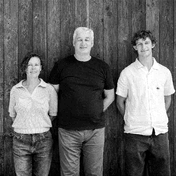
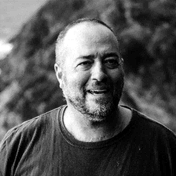
Manel Avino is known to the natural wine world as the Bubble Man, and one taste of his bottle-fermented sparklings explains why. From an ancient family estate above the Mediterranean, he and his daughter Nuria coax grower-Champagne-level precision from Catalan grapes that most of Spain had nearly forgotten.
Backstory
The estate began life as Can Ramon, a farm whose oldest vineyards were planted in the 14th century. Manel Avino represents the tenth generation to work the land. In 2001 he and his daughter Nuria relaunched the project under the name Clos Lentiscus, set on recovering the brilliance the property once held.
The Region
Clos Lentiscus sits in Sant Pere de Ribes, inside the Garraf natural park in Penedes, Catalonia. The vineyards lie in the hills along the Mediterranean at elevations of roughly 220 to 310 meters, on calcareous limestone soils still studded with marine fossils.
Vineyards and Farming
The Clos Lentiscus family tends around 20 hectares of vines surrounded by a further 20 hectares of forest. Farming is biodynamic, without pesticides or herbicides, and work in the vines and cellar follows the lunar cycle for planting, pruning, harvesting and bottling. The plantings favor native varieties including Xarello, Parellada, Sumoll and Malvasia de Sitges, alongside some Syrah.
Winemaking
Every Clos Lentiscus wine ferments with native yeasts. The sparklings are made in the traditional method with secondary fermentation in bottle, and for the tirage Manel uses rosemary honey from the estate's own bees. Many bottlings are made with no added sulfites.
The Wines
The Clos Lentiscus range spans more than two dozen cuvees across traditional-method and pet-nat sparkling, still white, red and orange wines. The sparkling wines built the estate's reputation, but the still bottlings from Sumoll, Xarello and Malvasia show the same purity and sense of place. We carry the Cartoixa Vermell and the Muscat of Alexandria.