Casot des Mailloles

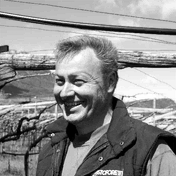
Jordi Perez, winemaker of Le Casot des Mailloles in Banyuls

On the steep schist terraces overlooking Banyuls-sur-Mer, Le Casot des Mailloles has spent three decades proving how vivid wine can be when nothing is added to it.

Backstory

Alain Castex and Ghislaine Magnier created the domaine in Banyuls in 1994. Castex had spent some fifteen years working in the Corbieres before moving to Roussillon, where the couple built a pioneering natural estate. In 2015 they handed the work over to Jordi Perez, a young Catalan who had left a town-hall job to study viticulture and oenology at Blanquefort. He continues the domaine in the same uncompromising spirit.

The Region

The roughly five-hectare estate sits on steep terraces above the town of Banyuls, in the Roussillon. Its name comes from the casots, the traditional dry-stone shelters scattered across the region's vineyards. The parcels are so steep that machines cannot work them.

Vineyards and Farming

Farming is organic and biodynamic, with cover crops, agroforestry plantings of olive and almond trees, and pastoralism among the vines. The work is done by hand on the terraces.

Winemaking

Wines ferment with native yeasts. They are never fined or filtered, and sulfites are avoided entirely, a discipline the domaine has held to from the start.

The Wines

The range covers white, rose and red bottlings, including Collioure-area cuvees, made from the Mediterranean varieties of the Banyuls hills. They are wines of energy and transparency that helped define what natural wine could be in southern France.
More articles

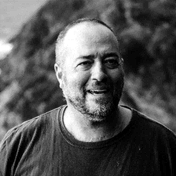
Vincent Marie holding a wine glass in the No Control cellar in Volvic, Auvergne
Former sports marketer turned punk-rock vigneron Vincent Marie launched No Control in 2012 in Volvic, Auvergne, farming 5 hectares of 117-year-old Gamay vines on volcanic soils with a horse and bottling every wine without sulfur, filtration, or any oenological additions.
Rhône Valley French wine regions blog, landscape photo from above, natural wine, primal wine - primalwine.com
The Rhône Valley, in southeastern France, borders the Alps to the east and the Massif Central to the west. The Rhône Valley is renowned for its incredibly expressive wines and hearty cuisine. In particular, the region's wines, influenced by its...

Italian Wine Regions

Pencil color illustration of Valpolicella - primalwine.com
Valpolicella is versatility in a glass—cherry-bright Valpolicella, velvet Ripasso, and contemplative Amarone, all shaped by...
Pencil color illustration of Mount Etna - primalwine.com
Etna is energy in a glass: Nerello Mascalese and Carricante channel lava flows, altitude, and...
Barolo: A Terroir-Driven Guide to Nebbiolo
Barolo is Nebbiolo at its most articulate—perfume and power shaped by Tortonian and Serravallian soils...

French Wine Regions

Savoie Wine Region - primalwine.com
Savoie, nestled in the heart of the French Alps, represents one of France's most distinctive...
Rhône Valley French wine regions blog, landscape photo from above, natural wine, primal wine - primalwine.com
The Rhône Valley, in southeastern France, borders the Alps to the east and the Massif...
Bordeaux French wine regions blog, photo of a Bordeaux alley and monuments, natural wine, primal wine - primalwine.com
Bordeaux, located in southwestern France, is bordered by the Atlantic Ocean to the west and...

Natural Winemakers

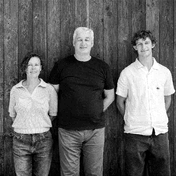
Maria and Sepp Muster, natural wine producers from Leutschach in Southern Styria, Austria, standing with the next generation of the family
Maria and Sepp Muster farm ten hectares of Demeter-certified biodynamic vineyards above Leutschach in Southern Styria, crafting textural, mineral whites from the region's distinctive Opok marl soil.
Possa, natural wine producer in Cinque Terre, Liguria, Italy
Heydi Bonanini practices heroic viticulture on terraced cliffs above Riomaggiore, producing Cinque Terre whites and the legendary Sciacchetra from rescued indigenous varieties.
Weingut Niklas, natural wine producer, in his vineyard in Alto Adige, Italy
Weingut Niklas is a family-run Alto Adige estate in Kaltern where Dieter Solva farms 7 hectares of calcareous mountain soils to produce precise, aromatic whites and structured Lagrein reds that have carried the family name for over 50 years.