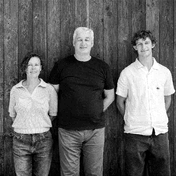
When Etna erupted in 1981, the lava that threatened the high villages of Castiglione di Sicilia also reshaped the land around them. It was in the aftermath that Dr. Rocco Siciliano acquired a parcel in the Solicchiata district and began, a few years later, to plant vines on the volcano's cool northern face.
Backstory
Rocco Siciliano planted his vineyard in 1986 on Etna's northern slope, an experimental and deeply personal project that he kept on a small scale for decades. From the 2015 vintage the estate began bottling its own wine in a natural style, working with the respected Sicilian winemaker Alessandro Viola, who guides the vinification. The result is a quiet collaboration that pairs an old, characterful vineyard with a minimal-intervention cellar and a winemaker known across the island for purity and restraint.
The Region
The Siciliano vines lie in the contrada of Solicchiata, in the commune of Castiglione di Sicilia on the north side of Mount Etna, the heart of the Etna Rosso DOC. At around 700 meters of elevation, with cold nights and a long growing season, this is one of the most distinctive volcanic terroirs in Europe. The soils are black volcanic sands and mineral-rich ash, the signature of Etna's reds, and the altitude gives the wines their tension and perfume.
Vineyards and Farming
The north-facing Siciliano site sits high and cool, conditions that favor slow, even ripening and the bright, structured reds Etna is known for. Farming is natural and the vineyard work is done by hand, without invasive techniques, in keeping with the project's small scale. Yields are low and the parcels are old, the kind of fruit that needs little intervention to taste of where it grew.
Winemaking
Vinification at Azienda Agricola Siciliano follows a hands-off path. Fermentation is spontaneous with native yeasts, with maceration on the skins for roughly a week to ten days. The wines age around twelve months, split between stainless steel and barrique, and are bottled unfiltered. Production is small across the range, with some cuvees made only in the low hundreds of bottles.
The Wines
The Azienda Agricola Siciliano calling card is Torrettanera, an Etna Rosso DOC built on roughly 90 percent Nerello Mascalese with about 10 percent Nerello Cappuccio, the classic Etna red blend. The lineup also includes Rosso Euphoria, a rare Pinot Nero from a vineyard planted in the Passopisciaro area in the 1980s and made in tiny quantities of a few hundred bottles, and a cuvee named Nonna Aurelia. Together they show two faces of high-elevation Etna: the native Nerello that defines the volcano, and a rare alpine guest in Pinot Nero.