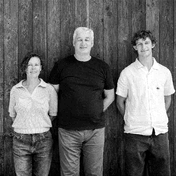
No Anders Frederik Steen wine is ever made twice. Each cuvee carries a name drawn from poetry or song lyrics, a single fleeting bottling that will never return, which is the whole point.
Backstory
Steen trained as a sommelier in Copenhagen, beginning at Noma, where he developed his taste for wines "only made of grapes." He went on to run the wine program at the restaurant Relae and its bar Manfred's, building one of the first all-natural wine lists in Denmark and moving into importing. He learned to make wine alongside the nomadic producer Jean-Marc Brignot, then settled in the Ardeche, making his first vintages in 2013 with the help of Gerald and Jocelyne Oustric of Domaine du Mazel, godparents of the local natural-wine scene.
The Region
Steen is based with his wife and collaborator Anne Bruun Blauert in Valvignieres, a village in the southern Ardeche on the western edge of the Rhone Valley. Vines have grown in this "valley of the vines" since Roman times, on soils that are a fine mix of clay and limestone.
Vineyards and Farming
Working as a vigneron-negociant, Steen buys fruit from growers he admires and farms parcels at friends' properties rather than owning large holdings outright. The vineyards are managed organically and biodynamically and hand-harvested. Most fruit comes from in and around Valvignieres and Le Mazel in the Ardeche, with some sourced from the Bannwarth family in Alsace.
Winemaking
Steen's motto is "Nothing added. Nothing taken away." Whites are direct-pressed in an old wooden press; reds are direct-pressed or hand-destemmed. Fermentations are spontaneous, often happening outdoors, and the wines pass through fiber tanks, demi-muids, and barriques. Everything is bottled unfiltered with no additions whatsoever, including zero added sulfur.
The Wines
The Steen grapes range widely, from Grenache Noir and Merlot to Pinot Noir, Pinot Gris, Sylvaner, Muscat, and Chardonnay, some Ardeche-grown and some from Alsace. Cuvee names read like found poetry, such as "Parfois je monte a l'etage et je me sens un peu perdu" or "Bad lighting call you later." Each is a one-time expression of a place and a moment, never to be repeated, which makes the labels themselves a kind of diary.