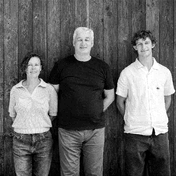
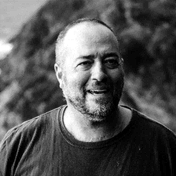
Before he made wine, Aldo Viola played professional football and traveled from Denmark to India to the Amazon. He came home to Alcamo to do one thing entirely his own way.
Backstory
Viola is a fourth-generation grower whose family worked vines in western Sicily before him, back through his father Don Ancilino, his grandfather, and his great-grandfather. He returned to Sicily in 1996, studied enology in Marsala, and became the first winemaker for the Centopassi cooperative, which farms land confiscated from the Corleonesi mafia. That grounding in honest, socially minded farming carried into his own labels, which are very much a one-man affair, with his brother Alessandro also bottling separately.
The Region
Aldo Viola's base is Alcamo, in the province of Trapani in northwest Sicily, a hilly stretch long regarded as some of the island's finest viticultural country. The vineyards overlook the Mediterranean, and the constant sea air, sunlight, and breeze shape wines that feel both ripe and saline.
Vineyards and Farming
Viola farms around 9 hectares spread over many small plots across several villages, some far apart from one another. The most distant, at Feudo Guarini, lies some 30 kilometers from the cellar, planted to Syrah and Nero d'Avola at about 350 meters. His core whites come from the Sicilian trio of Catarratto, Grillo, and Grecanico, with Perricone and Nerello among the reds. He works the vines himself, by hand, and farms without synthetic chemicals.
Winemaking
This is natural winemaking at its most hands-on. Viola de-stems grapes by hand, trusting what he calls the energy of human touch over machines, and he refuses preconceived ideas about how a wine should turn out. Whites and oranges can macerate for months, with extended skin contact of around nine months on the Grillo and Catarratto. He adds and removes nothing, does not fine or filter, and skips sulfur entirely when he judges it unnecessary.
The Wines
The skin-macerated Catarratto known as Brutto is an Aldo Viola signature, all white peach, gentle yeast, and dry mineral grip, a bottle he sees as fit for any hour of the day. A saignee rosso and other small-lot bottlings round out a deeply personal range that reflects one grower's instinct rather than any formula.