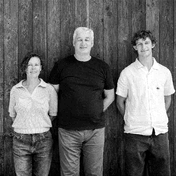
Few wine farms can claim a national park as their backyard. Agricola Vira works its vines inside the Madonie Regional Natural Park, in the hills of northwest Sicily.
Backstory
Agricola Vira is a family-run agricultural project that treats vines and olive trees as parts of a single working landscape rather than separate enterprises. The aim has been to make natural wine and organic olive oil from one protected stretch of the Madonie, letting the place rather than the cellar set the character of what goes in the bottle.
The Region
The Madonie, where Agricola Vira farms, rise behind the coast east of Palermo, a protected range of beech forest, limestone peaks, and stone villages. Vira sits in Contrada Suro, in the countryside between the seaside town of Cefalu and the village of Gratteri. At roughly 400 meters, with a mild climate and the Tyrrhenian Sea close by, the site enjoys cooling breezes and wide day-to-night temperature swings that preserve acidity and aroma in the grapes.
Vineyards and Farming
Agricola Vira is run as a strict organic system, certified by the Italian body Suolo e Salute. Only natural inputs are used for fertilization and for protection against pests, insects, and fungi. Vines grow alongside a grove of native Sicilian olive cultivars, including Nocellara, Biancolilla, and Cerasuola, with the farm pressing its own organic extra virgin olive oil. Plantings mix native and international varieties: the Sicilian grapes are Catarratto and Nero d'Avola, joined by Sauvignon Blanc, Chardonnay, and Cabernet Sauvignon.
Winemaking
The Agricola Vira wines are made naturally, with fermentations running spontaneously and without added chemical substances. The approach is low-intervention from vineyard to bottle, letting the altitude and sea air speak through fresh, savory wines. The orange Catarratto is given a short skin maceration of around two days, enough to add texture and a deeper hue without heavy tannin.
The Wines
Catarratto leads the Agricola Vira range, both as a fresh, unmacerated white and as the lightly skin-contact orange, which shows a Mediterranean, frank, and taut character. A red labeled Sauscia' draws on the warmer-climate plantings of Nero d'Avola and the international varieties. Alongside the wines, the estate's organic extra virgin olive oil rounds out a single-farm portfolio. Together they make a clear case for serious, terroir-driven wine grown high in the Madonie, an inland and mountain counterpoint to Sicily's more familiar coastal and volcanic styles.