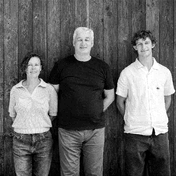
In Contrada Buonivini, a few kilometers from the wild dunes and salt lagoons of the Vendicari nature reserve, Salvatore Marino tends his vines with two tools he likes to name himself: la zappa e la forbice, the hoe and the pruning shears. There is no team, no machinery in the cellar, and no shortcut. Marino does everything alone.
Backstory
Marino founded his estate in 2017, but the knowledge behind it runs much deeper. He draws on five generations of family farming in Sicily's deep southeast, the Pachino corner of the island long prized for its sun-baked, high-quality vineyards. His guiding conviction is simple and old-fashioned: il vino si fa in vigna, the wine is made in the vineyard. Alongside grapes, his small holding also produces cereals for pasta flour, olives, and fruit, keeping the property a genuine mixed farm rather than a single-crop estate.
The Region
The vines sit near Noto and Pachino in the province of Siracusa, the southeastern tip of Sicily, close to the Vendicari wetlands. This is one of the hottest, sunniest growing zones in Italy, with maritime air moderating the heat. Contrada Buonivini has been recognized for serious viticulture for centuries, and the Nero d'Avola grown here carries the Eloro Pachino DOC designation. The proximity to the sea and the protected wetland gives the area a biodiversity that Marino treats as part of the farm rather than a backdrop.
Vineyards and Farming
Marino dedicates roughly one hectare of his land to vines, all trained in the traditional Sicilian alberello (bush vine) system. He farms organically with no synthetic chemicals, in vineyard or cellar, fertilizing only with mature organic manure and green manure. The lunar calendar guides the timing of work in both vineyard and cellar, and every task is carried out by hand. Total production is tiny, around 7,000 bottles a year.
Winemaking
The cellar work is as hands-off as the farming. Fermentation begins spontaneously with the grapes' indigenous yeasts, with no commercial additions. Macerations are short, roughly six days for the reds and about three for the whites, and the lunar calendar again dictates when to rack and bottle. Nothing is rushed and nothing is corrected; the wines are left to express the vintage as it came. The result is honest, unforced wine made the way Marino believes it should be.
The Wines
The Agricola Marino flagship is Turi, a name that appears across the range. Turi Nero d'Avola is the red, built on the native variety that defines southeastern Sicily, with Pignatello also planted on the estate. Turi Catarratto is the white, drawn from Sicily's most widely grown white grape and bottled under the Terre Siciliane IGT, and there is a Nero d'Avola rosato as well. Both reds and whites are direct, sun-soaked expressions of Pachino made by a single pair of hands, in quantities small enough that each bottle feels personal.