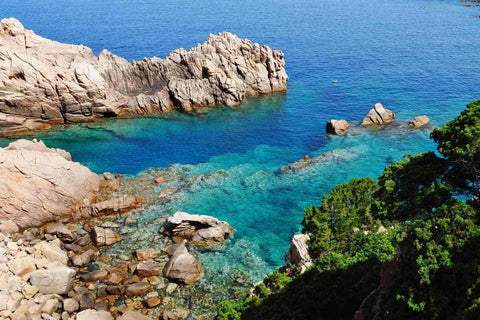
Surrounded by striking blue-green waters, private beach coves, medieval castles, and the freshest seafood, Sardegna (or Sardinia) is full of wonder and discovery. “The Emerald Coast,” once famously named, is the second-largest island in the Mediterranean, following Sicily. It has roughly 1,242 miles of coastline, and the Tyrrhenian Sea surrounds its pristine beaches. It is almost three times the size of the French-owned Corsica, which is located to the north.
Once governed by Carthage, Ancient Rome, the Byzantines, Spanish Arabs, and then Spanish Catalans, the region is bustling with culture, history, and a storyline told through its vineyards. Sardinia is one of five “autonomous regions” in the Italian constitution. This means the island has gone a step further toward protecting its traditions. This separation heavily influences Sardinian wine culture, making the portfolio of vineyards dissimilar to the varieties planted on the mainland.
The provinces of the region are Cagliari (the regional capital), Carbonia-Iglesias, Olbia-Tempio, Oristano, Medio Campidano, Sassari, and Ogliastra. There are roughly 20,000 hectares of vineyards in Sardinia, making it the lowest in wine production of any Italian region. Despite its volume, however, the native grapes and the history of the vines tell a powerful story. Sardinian wines are glorious.
Sardinia, the second-largest island in the Mediterranean Sea, is a region of Italy known for its rich history, unique culture, and diverse cuisine. Located west of the Italian mainland, Sardinia boasts a distinct identity shaped by its geographical isolation and varied landscape. This essay explores the history, geography, wines, and cuisine of Sardinia.
History of Sardinia
Sardinia has a rich and varied history from ancient times. The island was first inhabited during the Paleolithic period, with evidence of early human settlements scattered across the region. Throughout its history, Sardinia has been influenced by numerous civilizations, including the Phoenicians, Carthaginians, Romans, and Byzantines.
In the Middle Ages, Sardinia was divided into four independent kingdoms known as "Judicates." These were eventually unified under the rule of the Aragonese and later the Spanish Crown. In the 18th century, Sardinia became part of the Kingdom of Savoy and played a crucial role in the unification of Italy in the 19th century.
Geography of Sardinia
Sardinia's geography is diverse, featuring rugged mountains, rolling hills, and a stunning coastline. The island's central mountainous region, dominated by the Gennargentu range, contrasts its coastal plains and beaches. The unique landscape contributes to Sardinia's rich biodiversity and varied microclimates.
The island's soil composition varies, with granite, limestone, and volcanic rock formations. This diversity in terrain and soil types influences the region's agricultural practices and viticulture, making Sardinia a unique area for wine production.
Wines of Sardinia
Sardinia is renowned for its distinctive wines, which reflect the island's unique terroir. The region's primary grape varieties include Cannonau (Grenache), Vermentino, Carignano (Carignan), and Monica. Sardinian wines are known for their robust flavors and aromatic profiles.
Cannonau: The most famous red wine from Sardinia, Cannonau is believed to be one of the oldest grape varieties in the Mediterranean. It produces full-bodied wines with rich, fruity flavors and spicy notes.
Vermentino: A versatile white grape, Vermentino thrives in Sardinia's coastal regions. It produces wines with crisp acidity, floral aromas, and citrus flavors, making it perfect for pairing with seafood.
Carignano: Known for its deep color and tannic structure, Carignano is often blended with other varieties to create complex and age-worthy wines.
Monica: This red grape produces light to medium-bodied wines with soft tannins and fruity flavors, often enjoyed young.
Cuisine of Sardinia
Sardinian cuisine is deeply rooted in its agricultural and pastoral traditions. The island's food is characterized by simple, hearty dishes from locally sourced ingredients. Sardinia is famous for its sheep's milk cheeses, cured meats, and seafood.
Pecorino Sardo: A traditional Sardinian cheese made from sheep's milk. It has a rich, tangy flavor and comes in both fresh and aged varieties.
Porceddu: A popular dish featuring roasted suckling pig. It is seasoned with herbs and slow-cooked over an open fire, resulting in tender, flavorful meat.
Pane Carasau: Also known as "music bread," this traditional flatbread is thin and crispy. It is often served with cheese and cured meats or used as a base for dishes like pane frattau.
Bottarga: Salted, cured fish roe, usually from mullet or tuna. It is grated over pasta or served thinly sliced with olive oil and lemon.
Culurgiones: Sardinian dumplings filled with potatoes, pecorino cheese, and mint. They are typically served with a simple tomato sauce or butter and sage.
Fregola: A type of pasta similar to couscous, made from semolina dough. It is often cooked with clams, tomatoes, and saffron to create a flavorful seafood dish.


