Domaine de la Petite Sœur

Adrien de Mello of Domaine de la Petite Soeur tasting wine from a barrel in his cellar

In the schist hills of Anjou, Adrien de Mello works barely a handful of hectares by horse and hand, making some of the Loire's most uncompromisingly natural wines.

Backstory

Adrien de Mello founded Domaine de la Petite Soeur after a winding path through wine: he worked in Quebec, South Africa, the United States and Chateauneuf-du-Pape, where he made wine for a biodynamic estate, before earning a diploma in Beaune. He settled in the Loire in 2015, taking on vines around the village of Saint-Aubin-de-Luigne that were already farmed without chemicals.

The Region

The estate lies in Anjou, in the Loire Valley, where the vines grow on schist soils in and around Saint-Aubin-de-Luigne. Adrien farms roughly four hectares across this terroir.

Vineyards and Farming

He converted the estate to biodynamics, developing his own decoctions and ploughing with a horse, with which he has built a close working bond. He forages wild plants such as nettle, comfrey, yarrow and buckthorn to make teas and preparations for the vineyards. Planted varieties include Chenin Blanc, Sauvignon Blanc, Gamay, Cabernet Franc and Cabernet Sauvignon.

Winemaking

In the cellar the approach is radically hands-off. The wines ferment spontaneously with wild yeasts and are vinified and aged without added inputs, including no added sulphur. The result is a range of vivid, energetic natural wines, from chenin-based whites to lighter reds, that carry the imprint of the schist and of Adrien's meticulous farming.

More articles

Aaron and Cara Mockrish of Frenchtown Farms pruning vines in their North Yuba vineyard
Aaron and Cara Mockrish farm and make wine in California's North Yuba foothills, mentored by Clos Saron's Gideon Beinstock, crafting foot-trodden, native-ferment wines from organic mountain vineyards.
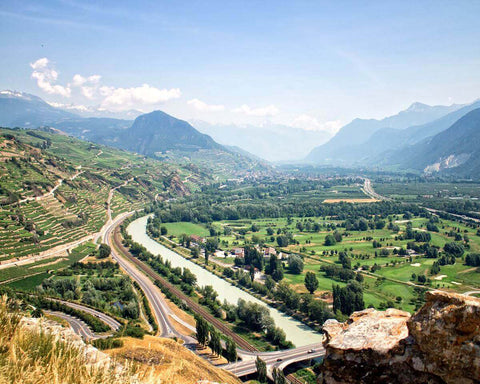
Rhône Valley French wine regions blog, landscape photo from above, natural wine, primal wine - primalwine.com
The Rhône Valley, in southeastern France, borders the Alps to the east and the Massif Central to the west. The Rhône Valley is renowned for its incredibly expressive wines and hearty cuisine. In particular, the region's wines, influenced by its...

Italian Wine Regions

Pencil color illustration of Valpolicella - primalwine.com
Valpolicella is versatility in a glass—cherry-bright Valpolicella, velvet Ripasso, and contemplative Amarone, all shaped by...
Pencil color illustration of Mount Etna - primalwine.com
Etna is energy in a glass: Nerello Mascalese and Carricante channel lava flows, altitude, and...
Barolo: A Terroir-Driven Guide to Nebbiolo
Barolo is Nebbiolo at its most articulate—perfume and power shaped by Tortonian and Serravallian soils...

French Wine Regions

Savoie Wine Region - primalwine.com
Savoie, nestled in the heart of the French Alps, represents one of France's most distinctive...
Rhône Valley French wine regions blog, landscape photo from above, natural wine, primal wine - primalwine.com
The Rhône Valley, in southeastern France, borders the Alps to the east and the Massif...
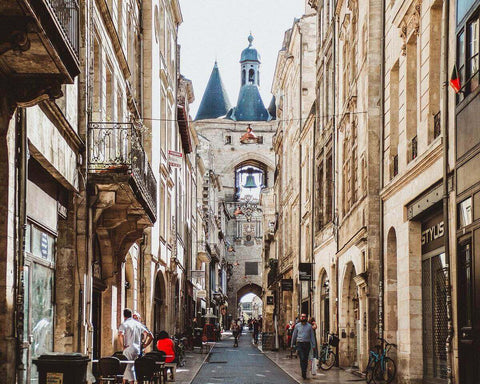
Bordeaux French wine regions blog, photo of a Bordeaux alley and monuments, natural wine, primal wine - primalwine.com
Bordeaux, located in southwestern France, is bordered by the Atlantic Ocean to the west and...

Natural Winemakers

Maria and Sepp Muster, natural wine producers from Leutschach in Southern Styria, Austria, standing with the next generation of the family
Maria and Sepp Muster farm ten hectares of Demeter-certified biodynamic vineyards above Leutschach in Southern Styria, crafting textural, mineral whites from the region's distinctive Opok marl soil.
Possa, natural wine producer in Cinque Terre, Liguria, Italy
Heydi Bonanini practices heroic viticulture on terraced cliffs above Riomaggiore, producing Cinque Terre whites and the legendary Sciacchetra from rescued indigenous varieties.
Weingut Niklas, natural wine producer, in his vineyard in Alto Adige, Italy
Weingut Niklas is a family-run Alto Adige estate in Kaltern where Dieter Solva farms 7 hectares of calcareous mountain soils to produce precise, aromatic whites and structured Lagrein reds that have carried the family name for over 50 years.