Ashanta Wines

Ashanta Wines — natural wine producer

The name Ashanta carries two meanings at once. It fuses the surnames Ashton and Basanta, and it echoes asante, the Swahili word for thank you, a nod to the African ancestors of co-founder Chenoa Ashton-Lewis. Both meanings sit behind a project that turned family loss into one of California's most uncompromising natural-wine labels.

Backstory

Chenoa Ashton-Lewis, a fifth-generation Oakland native and third-generation winemaker, and her partner Will Basanta, a cinematographer, began experimenting in October 2019 with unsold grapes from Chenoa's family vineyard on Sonoma Mountain. That organic site, planted by her grandparents in the early 1970s and roughly 50 years old, had been devastated by the 2017 Nuns Fire, which destroyed about 80 percent of the vines and her grandparents' home. The couple made their first commercial vintage in 2020 at the historic Coturri Winery and now base the project between Sebastopol and Los Angeles.

Vineyards & Farming

Ashanta works with family-operated vineyards farmed organically or biodynamically across Sonoma, Mendocino, the Sierra Foothills, the Central Coast, and San Diego County. Sources include a 35-year-old Chardonnay block at Grebnikoff, Claus Vineyard in Mendocino, and Suma Kaw in the Sierra Foothills. The couple also forages wild fruit from wilderness and urban spaces, folding it into their co-ferments.

Winemaking

Ashanta follows a strict zero:zero standard, often described as the gold standard of natural winemaking: no added yeast, no tartaric acid, no chemicals, and no sulfur. Fruit is hand-harvested and ferments spontaneously with indigenous yeast, with close attention paid to healthy soil biology in the vineyards that feed the cellar. The wines age in neutral oak, typically 7 to 14 months, and are bottled unfined and unfiltered with zero added sulfites.

The Wines

The portfolio runs to roughly a dozen cuvees spanning skin-contact whites, field blends, roses, petillant naturels, and California reds. It includes a Zinfandel called Zazen, an Encantando Riesling, a Chardonnay named Calypso, a Tempranillo called Minotaure, a Merlot-Chardonnay blend named Mawu, the Carignan-Syrah-Mourvedre rose Resist Rosado, and experimental bottlings such as the apple-and-Carignan co-ferment Sidra and the elderberry pet-nat Brutal. The through-line is experimentation grounded in transparency.

More articles

Gaia Felix - natural wine producer profile | Primal Wine illustration
Gaia Felix revives the ancient alberata tradition of vines climbing trees, farming Asprinio biodynamically on volcanic soils north of Caserta in Campania.
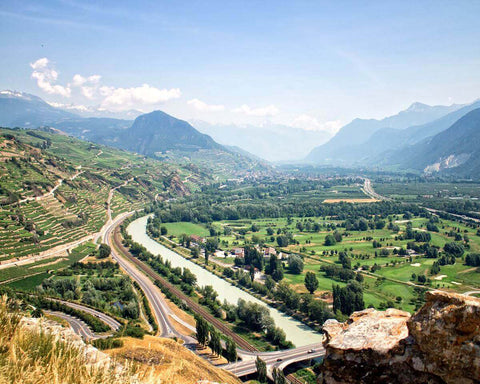
Rhône Valley French wine regions blog, landscape photo from above, natural wine, primal wine - primalwine.com
The Rhône Valley, in southeastern France, borders the Alps to the east and the Massif Central to the west. The Rhône Valley is renowned for its incredibly expressive wines and hearty cuisine. In particular, the region's wines, influenced by its...

Italian Wine Regions

Pencil color illustration of Valpolicella - primalwine.com
Valpolicella is versatility in a glass—cherry-bright Valpolicella, velvet Ripasso, and contemplative Amarone, all shaped by...
Pencil color illustration of Mount Etna - primalwine.com
Etna is energy in a glass: Nerello Mascalese and Carricante channel lava flows, altitude, and...
Barolo: A Terroir-Driven Guide to Nebbiolo
Barolo is Nebbiolo at its most articulate—perfume and power shaped by Tortonian and Serravallian soils...

French Wine Regions

Savoie Wine Region - primalwine.com
Savoie, nestled in the heart of the French Alps, represents one of France's most distinctive...
Rhône Valley French wine regions blog, landscape photo from above, natural wine, primal wine - primalwine.com
The Rhône Valley, in southeastern France, borders the Alps to the east and the Massif...
Bordeaux French wine regions blog, photo of a Bordeaux alley and monuments, natural wine, primal wine - primalwine.com
Bordeaux, located in southwestern France, is bordered by the Atlantic Ocean to the west and...

Natural Winemakers

Maria and Sepp Muster, natural wine producers from Leutschach in Southern Styria, Austria, standing with the next generation of the family
Maria and Sepp Muster farm ten hectares of Demeter-certified biodynamic vineyards above Leutschach in Southern Styria, crafting textural, mineral whites from the region's distinctive Opok marl soil.
Heydi Bonanini of Possa sitting in his cellar in Riomaggiore, Cinque Terre
Heydi Bonanini practices heroic viticulture on terraced cliffs above Riomaggiore, producing Cinque Terre whites and the legendary Sciacchetra from rescued indigenous varieties.
Dieter Solva in the barrel cellar at Weingut Niklas in Kaltern, Alto Adige
Weingut Niklas is a family-run Alto Adige estate in Kaltern where Dieter Solva farms 7 hectares of calcareous mountain soils to produce precise, aromatic whites and structured Lagrein reds that have carried the family name for over 50 years.